
What is VHIC?
Virus–Human Ion Channel Interaction Database (VHIC) is the first comprehensive database specifically designed to catalog both predicted and experimentally supported interactions between viral proteins and human ion channel proteins. VHIC integrates large-scale computational predictions generated using the VPPI-MetaGO framework, along with curated known interactions, providing an accessible platform for investigating the role of ion channels in virus–host interactions.
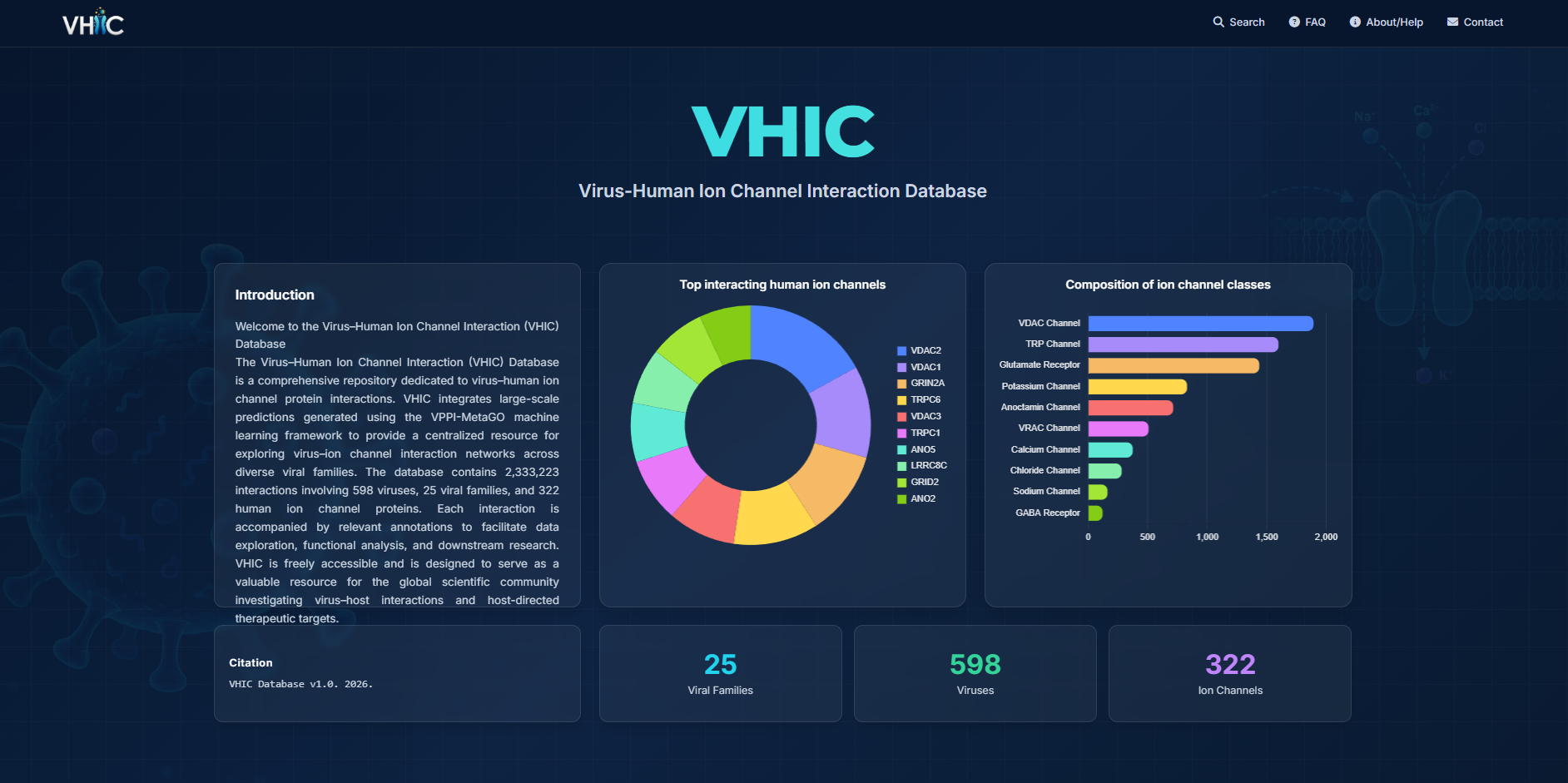
Figure 1. VHIC homepage displaying the database overview, summary statistics, navigation menu, and entry points for browsing virus–human ion channel interaction predictions.
The current release of VHIC comprises 1,27,165 virus–human ion channel interactions spanning 585 human viruses from 25 viral families. For each interaction, the database provides a probability scores, Z score, interaction visualizations, and downloadable datasets. Users can browse virus names, viral proteins, or human ion channels, and explore interaction networks through an intuitive web interface. By consolidating these predictions into a unified resource, VHIC serves as a valuable platform to identify host ion channel targets, and supporting antiviral therapeutic discovery.
How to Use the VHIC Database
The Virus–Human Ion Channel Interaction (VHIC) Database provides two search modes, Quick Text Search and Advanced Search, enabling users to efficiently retrieve High confident and Moderate confident virus–human ion channel interactions and their corresponding interaction networks.
1. Quick Text Search
Use the search bar to retrieve virus–human ion channel interactions using any of the following identifiers or keywords:
- Virus organism name (e.g., Dengue virus 1, SARS-CoV-2)
- Viral protein name (e.g., Envelope protein E, NS1, Capsid protein)
- Viral UniProt accession (e.g., P29990)
- Human ion channel gene name (e.g., VDAC1, TRPV1, LRRC8A)
- Human ion channel UniProt accession (e.g., P21796)
Keyword searching is supported, allowing partial names or identifiers to retrieve all matching records.
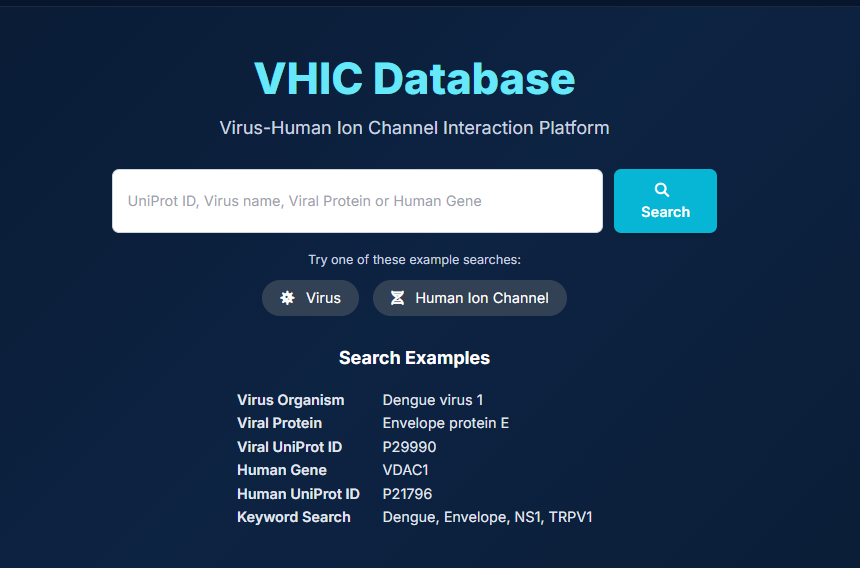
Figure 2. Quick text search allows users to search using virus names, viral proteins, UniProt accessions, human ion channel gene symbols, or UniProt accessions. Partial keyword searches are also supported.
2. Advanced Search
For more specific queries, use the hierarchical dropdown menus to browse the database by:
- Virus Sense (dsDNA, dsRNA, ssDNA, ssRNA)
- Virus Family
- Virus Species
- Virus Strain/Isolate
- Viral Protein
Upon selecting a viral protein, the corresponding viral UniProt accession is automatically displayed.
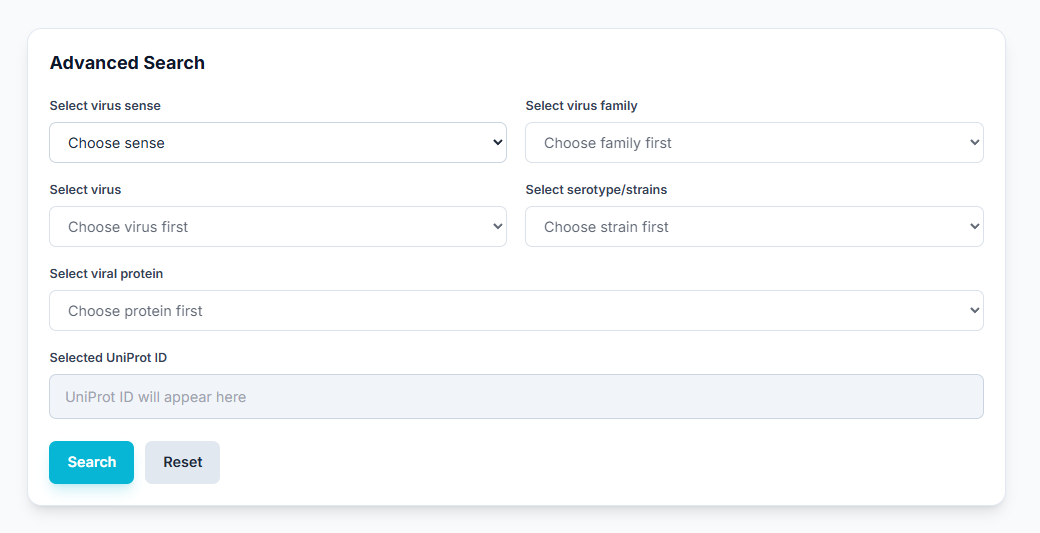
Figure 3. Advanced search enables hierarchical browsing by genome sense, viral family, virus species, strain or isolate, and viral protein. The corresponding UniProt accession is automatically displayed after selecting a protein.
3. View Interaction Results
After initiating a search, the results page displays:
- Virus organism information
- Viral protein name
- Viral UniProt accession
- Human ion channel gene name
- Human ion channel UniProt accession
- Predicted interaction probability score
- Z score
- Confidence level
- Experimentally validated interactions (where available), with associated PubMed references are highlighted in green colour.
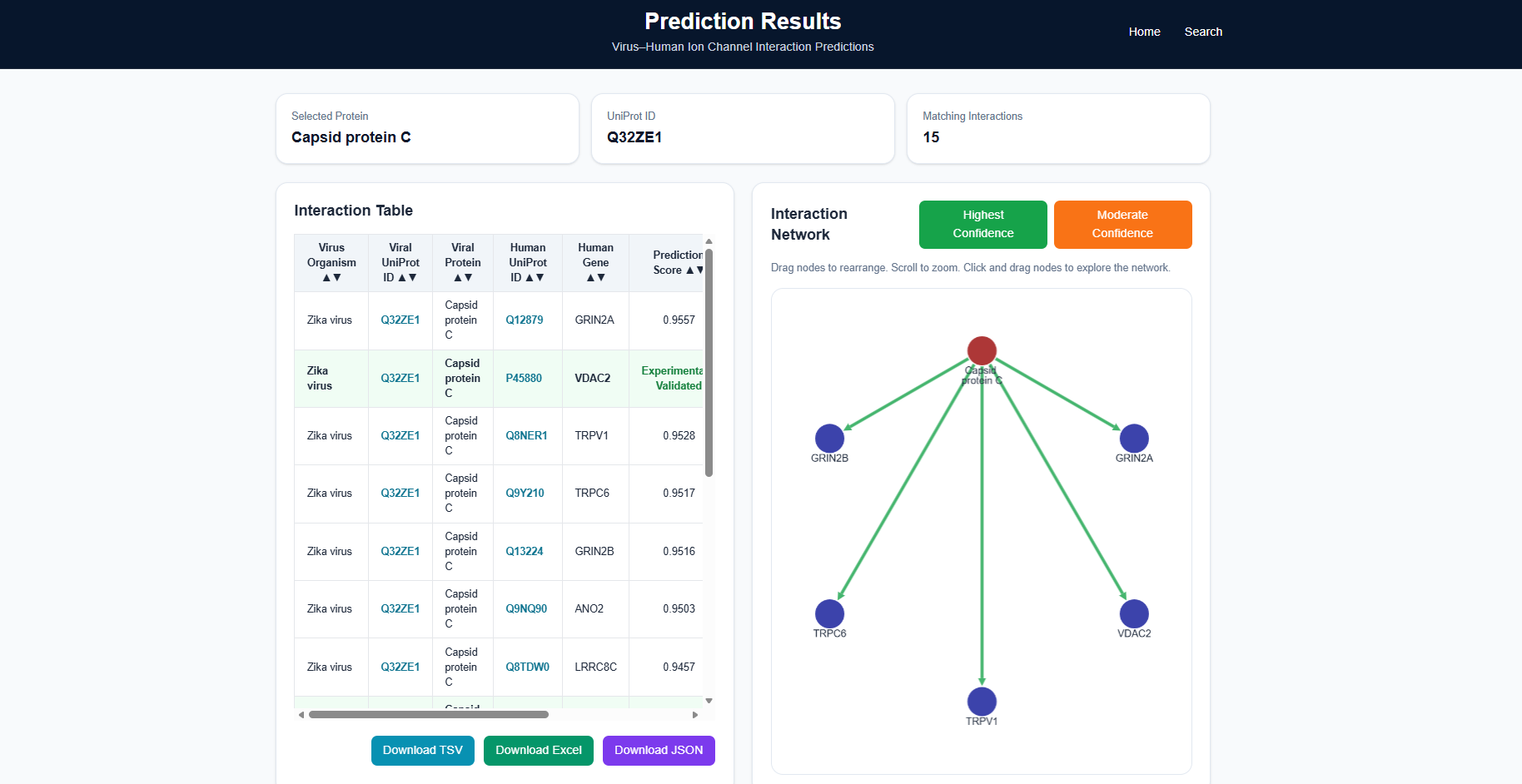
Figure 4. Interaction results page displaying the selected viral protein, UniProt accession, total number of predicted interactions, sortable interaction table with prediction probability, Z-score, confidence level, experimentally validated interactions with PubMed references, and options to download the retrieved results in TSV, Excel, or JSON formats.
4. Explore the Interaction Network
The interactions of the selected protein is visualized as an interactive network, where:
- Red nodes represent viral proteins.
- Blue nodes represent human ion channels.
- Users can zoom, pan, drag nodes, and inspect node-specific information.
- The network can be displayed as the Top 10% highest-confidence interactions and Next 20% as moderate- confidence interactions.
5. Download Results
Retrieved interaction data can be downloaded for downstream analysis in the following formats:
- TSV
- Microsoft Excel (.xlsx)
- JSON
6. Search Tips
- Searches are case-insensitive.
- Partial keywords are supported (e.g., Dengue, Envelope, or VDAC).
- If multiple viruses contain the same protein name, all matching proteins are listed, allowing users to select the desired virus before viewing its interaction results.
- Human ion channels can be searched using either their gene symbol or UniProt accession.
Help
If a dropdown is empty, first choose the parent category above it. The dropdowns are linked in order, so each selection filters the next one.